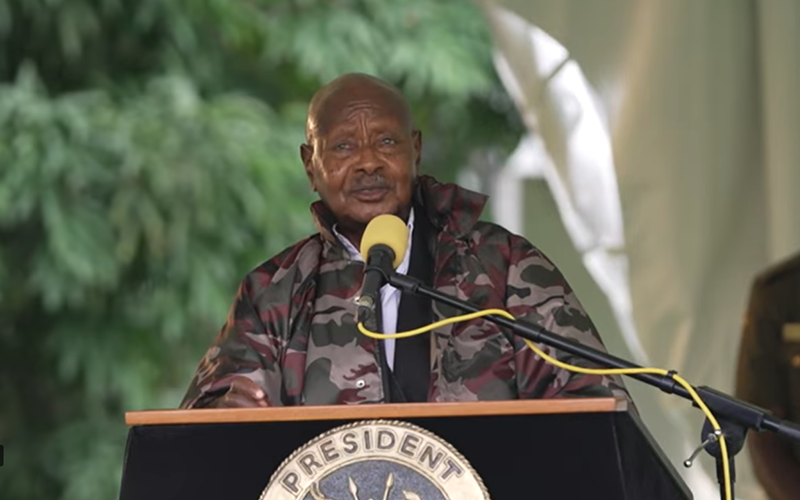
The President of Uganda, Yoweri Kaguta Museveni, has attributed the persistent conflicts in the Middle East to chauvinism and called for the recognition of two states—Israel and Palestine—as the most viable path to lasting peace in the region.
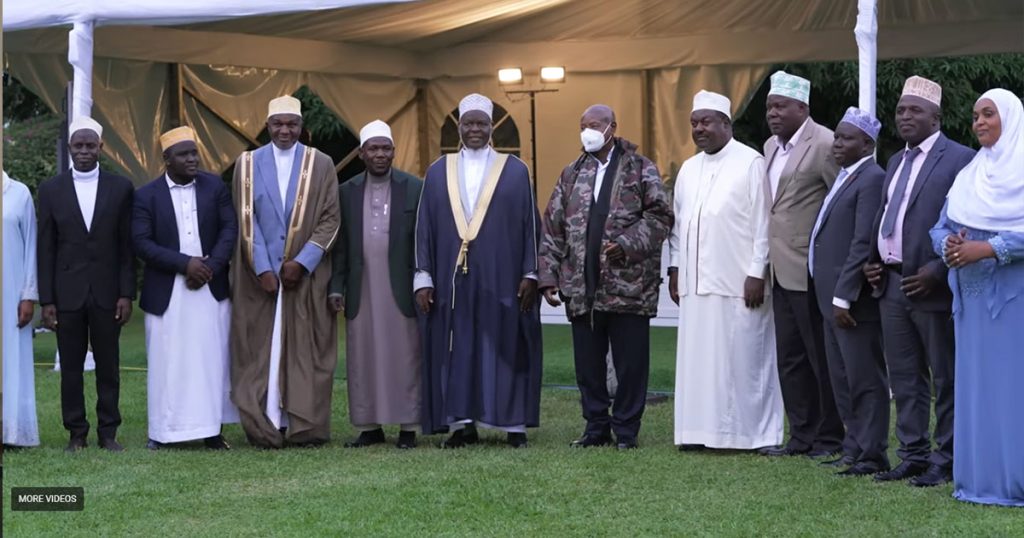
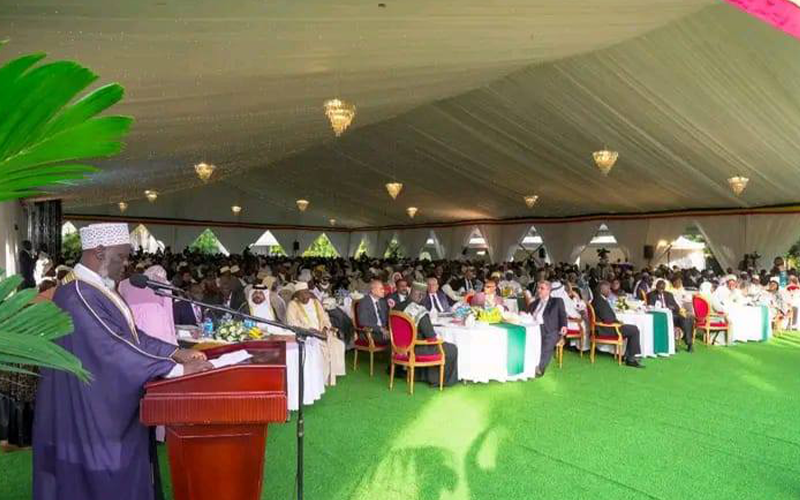
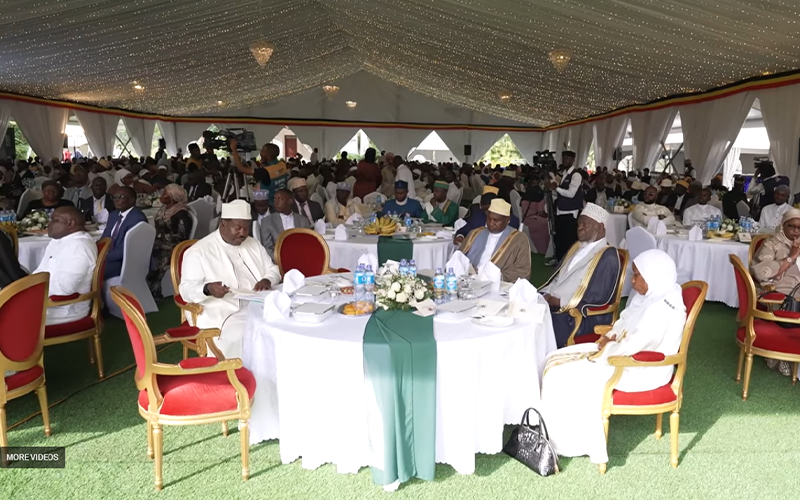
President Museveni made the remarks during a State Iftar dinner he hosted together with the First Lady, Janet Kataaha Museveni, for members of the Muslim community on Thursday evening at State House Entebbe.
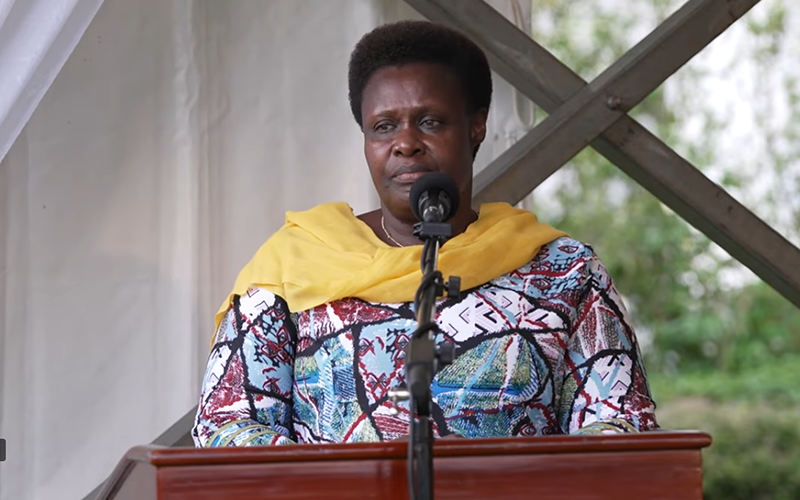
The President appeared to be prompted to address the ongoing tensions in the Middle East after Sarah Kanyike, the Presidential Avisor on Kampala metropolitan affairs, who served as the mistress of ceremonies, introduced H.E Majed Saffar, the Iranian Ambassador to Uganda, among other diplomats. The introduction drew loud applause from guests gathered in a large presidential tent, suggesting sympathy among sections of the audience for Iran amid the ongoing hostilities in the region.
“All those people are our friends—the Americans, Israelis, the UAE, Saudis and Qataris,” President Museveni said.
He explained that during several interactions with leaders from the region, he has consistently questioned why they cannot agree to the existence of two states—Israel and Palestine—living side by side. Museveni added that as a Christian, his view is partly informed by the Bible, which acknowledges the peoples inhabiting the contested region.
The President further recounted an interaction he once had with Sudanese leaders during an official visit at the invitation of former Sudanese President Omar al-Bashir.
“I asked them the Arabic word for ethnicity or identity and the word for common good or interest. They told me Hawiya and Masulaha respectively. I then asked them what type of politics they practise in their governance—is it politics based on identity or on common good?” he said, noting that the question drew prolonged laughter from the leaders.
Drawing parallels with Uganda’s past, Museveni recalled the country’s turbulent political history in the 1960s when divisions along religious and ethnic lines led to violent conflicts that lasted for decades.
He said the situation only began to change when he and his colleagues mobilised around the ideology of the National Resistance Movement, which emphasised unity of purpose and the pursuit of the common good rather than identity-based politics.
Museveni thanked Ugandans for embracing that ideology, saying it had enabled the NRM to win several national elections and contributed to stability and national development.
He concluded by urging citizens to continue supporting government development programmes and to maintain peace and stability across the country.
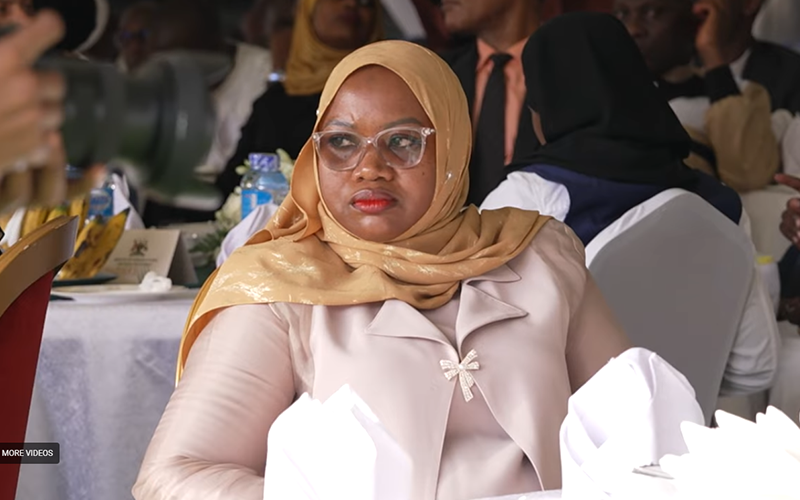
Earlier, the Vice President Jessica Alupo and the Speaker of Parliament Anita Annet Among also addressed the gathering and conveyed their Ramadan greetings to the Muslim community.
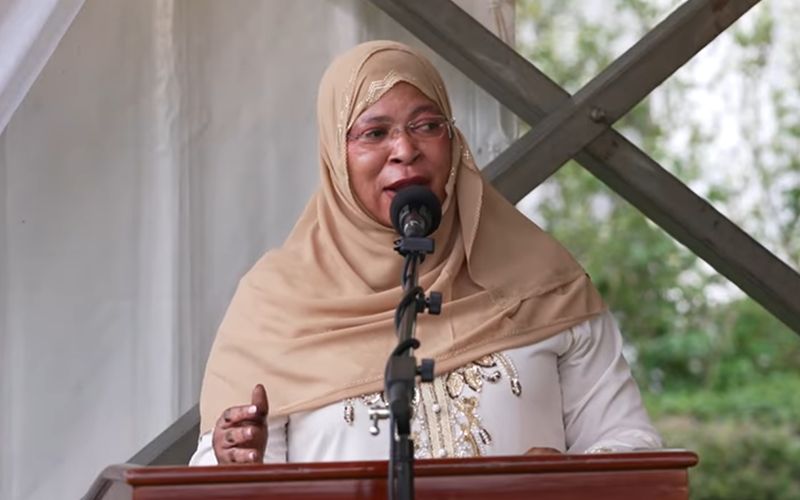
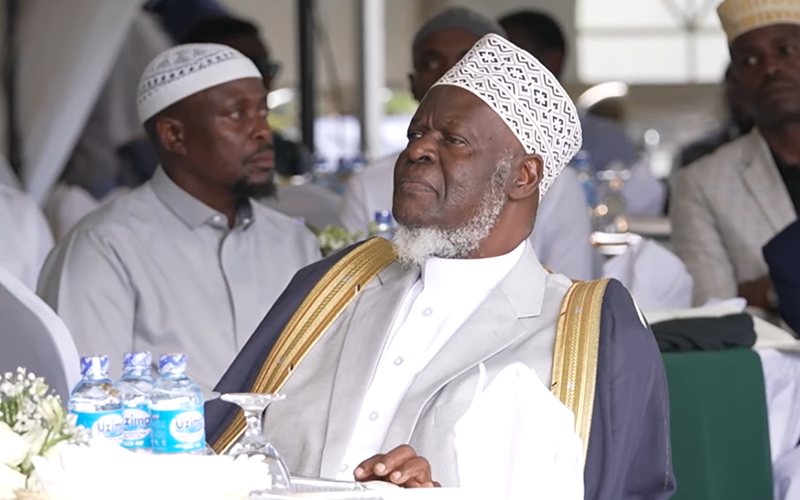
Speaking on behalf of Muslims, the Mufti of Uganda His Eminence, Shaban Ramadhan Mubaje presented an eight-page address outlining several development programmes being implemented by the Uganda Muslim Supreme Council.
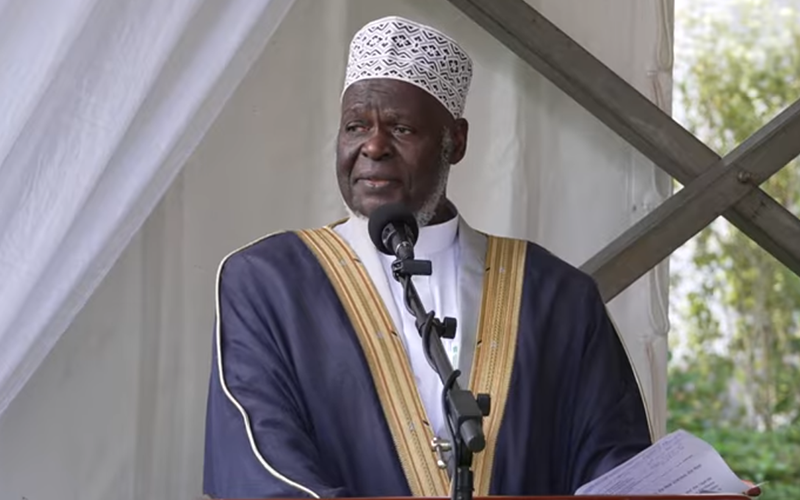
The Mufti highlighted the ongoing disbursement of UGX 1.5 billion from the UGX 2 billion that the President pledged to support Muslim women’s SACCOs across the country, aimed at helping them start small businesses and improve household incomes.
He also thanked the President for pledging an additional UGX 20 billion to expand women’s SACCO initiatives nationwide.
Dr. Sheikh Mubaje further informed the President that the council had already registered similar SACCOs intended to support mosque imams in 87 Muslim districts across the country.
In the same address, he revealed that the council had recently entered a strategic partnership with Matugga Industries and Logistics Hub to improve agricultural and livestock production. The initiative will train farmers and protect them from counterfeit agricultural inputs through services offered at Halal Farmers Centres established in Muslim districts.
The Mufti also raised the issue of the proposed Kadhi’s Court law, which remains pending before Parliament.He concluded by appealing to the President, in the spirit of the holy month of Ramadan, to consider the release of prisoners—particularly those detained for political reasons and not charged with criminal offences—in order to promote reconciliation and justice.
The Mufti also prayed for peace around the world, especially in regions affected by war. The State Iftar dinner was attended by several dignitaries from different sectors of society.