
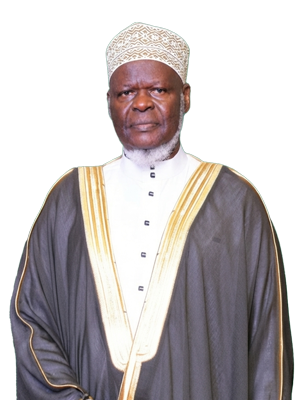

Early Life
Dr. Sheikh Mubaje was born on Saturday, 12 March 1955, in Kitaagabalu Village, Buyobo, in present-day Sironko District, eastern Uganda. He is the son of the late Hajji Ramadhan Mubaje (1922–2003) and Hajjat Hadija Nambozo.
He was raised in a humble but hardworking family where discipline, honesty and self-reliance were deeply valued. His father worked as a farmer, mechanic and taxi driver, while his mother devoted herself to raising the family. Like many children of his generation, Sheikh Mubaje contributed to the family’s livelihood by cultivating and selling vegetables to raise school fees and meet household needs. The values instilled in him during his childhood continue to define his philosophy of leadership and service.
Education
Dr. Sheikh Mubaje began his formal education in 1961 at Bitaagalu Muslim Primary School, now Bulamburi Primary School, before transferring to Buyobo Primary School. In 1968, he completed his Primary Leaving Examinations with a First Grade, emerging as the best candidate at his school. Although he qualified for secondary education, financial constraints prevented his immediate enrolment, prompting him to work alongside his father and later spend time in Kenya, where he gained valuable life experience.
His Islamic education began under Mwalimu Musa Kaduyu before continuing under Sheikh Abubakar Muboolo, who inspired him to pursue advanced Islamic scholarship. He later studied under distinguished scholars including Sheikh Amir Lule and Sheikh MuhamudLutaya, progressing rapidly through the Islamic education system and completing Thanawi studies.
Following Uganda’s liberation war, he pursued higher education at Mahad Madina Al-Ilmi before enrolling at Qassim University in the Kingdom of Saudi Arabia, where he graduated with a Bachelor’s Degree in Sharia (Islamic Law). Determined to continue expanding his academic knowledge, he later obtained a postgraduate qualification from the Islamic University in Uganda before earning a Master’s Degree in Religious Studies from Makerere University. He subsequently served as a lecturer at the Islamic University in Uganda, contributing to the development of Islamic higher education in the country.
In recognition of his distinguished contribution to religious leadership, education and peacebuilding, Dr. Sheikh Mubaje was awarded an Honorary Doctor of Philosophy by Swedish Crown University.
Teaching and Educational Leadership
Education has remained one of Dr. Sheikh Mubaje’s lifelong passions. Upon returning to Uganda, he founded Noor Islamic Institute in Mbale, an institution that has grown into a respected centre for both secular and Islamic education from nursery to secondary level while also training Imams and religious leaders.
He later became one of the pioneer lecturers at the Islamic University in Uganda (IUIU), helping lay the academic foundation of one of East Africa’s leading Islamic universities. Throughout his career, he has remained a strong advocate for education as the cornerstone of individual empowerment, community development and national transformation.
Religious Leadership
Dr. Sheikh Mubaje served as Imam of Masjid Noor in Mbale before being appointed District Kadhi of Bugisu in 1991. His scholarship, integrity and leadership abilities earned him national recognition, culminating in his unanimous election as Mufti of Uganda on 12 December 2000 by the Uganda Muslim Supreme Council General Assembly.He was inaugurated on 6 January 2001 and immediately embarked on an ambitious agenda centred on Muslim unity, constitutional governance, institutional rebuilding and socio-economic development.
Transforming the Uganda Muslim Supreme Council
Under Dr. Sheikh Mubaje’s leadership, the Uganda Muslim Supreme Council has undergone far-reaching institutional transformation.
He has overseen constitutional reforms that strengthened governance, accountability and leadership succession within the organisation. During his tenure, UMSC has expanded its property portfolio through the recovery, registration and development of Muslim assets across Uganda, creating sustainable revenue streams that now support staff remuneration, education, regional administration and community development programmes.
The Council has also expanded investments in education, agriculture, vocational skills development, youth empowerment and poverty eradication, enabling thousands of Muslim households to improve their livelihoods through enterprise, modern farming and skills training.
Champion of Muslim Unity
Perhaps Dr. Sheikh Mubaje’s greatest legacy has been his unwavering commitment to Muslim unity.
Following years of division within the Muslim community, he prioritised reconciliation, consultation and constitutional governance, bringing together different Islamic schools of thought under one institutional framework. Throughout his leadership, he has consistently encouraged dialogue over confrontation, institution-building over personal interests and cooperation over division.
Interfaith Dialogue and Peacebuilding
Dr. Sheikh Mubaje is internationally recognised for his contribution to interfaith dialogue and peacebuilding.
He was instrumental in the establishment of the Inter-Religious Council of Uganda (IRCU), bringing together Muslim and Christian leaders to promote peaceful coexistence, national unity and collaborative action on education, health, environmental conservation and humanitarian response. Through IRCU and Religions for Peace, he contributed to faith-led peace initiatives during the conflict in northern Uganda and has continued advocating dialogue as the foundation for sustainable peace.
Regional and International Leadership
Beyond Uganda, Dr. Sheikh Mubaje has distinguished himself as a respected voice in global Islamic and interfaith affairs.
He currently serves as:
- Mufti of Uganda and Spiritual Head of the Uganda Muslim Supreme Council.
- Co-Chair of the African Council of Religious Leaders – Religions for Peace (ACRL-RfP).
- Member of the Executive Committee of Religions for Peace International.
- Member of the Secretariat General for Fatwa Houses Worldwide.
- Committee Member of the Muslim World League.
- Co-Chair of the Islamic Trade and Culture Initiative.
- Member of the Supreme Council of Muslim Leaders, a global body of eminent Muslim scholars since 2015.
Through these positions, he has represented Uganda in numerous international conferences and high-level engagements on peacebuilding, religious freedom, education, sustainable development, climate action and humanitarian cooperation.
Leadership Philosophy
Throughout his ministry, Dr. Sheikh Mubaje has consistently emphasised that Islam encourages education, productive work, peaceful coexistence, constitutional governance and service to humanity. He has called upon Muslims to embrace entrepreneurship, acquire practical skills, strengthen family values and contribute positively to national development while remaining steadfast in their faith.
His leadership has been guided by the belief that strong religious institutions should not only nurture spiritual growth but also address poverty, education, healthcare and social transformation.
Legacy
Today, Dr. Sheikh Shaban Ramadhan Mubaje is widely recognised as one of Uganda’s most influential religious leaders. His legacy is reflected in a more united Muslim community, a stronger Uganda Muslim Supreme Council, expanded educational institutions, improved financial sustainability, strengthened interfaith cooperation and enhanced international visibility for Uganda’s Muslim community.
With more than forty years of scholarship and religious service, and over two decades as Mufti of Uganda, he continues to inspire generations through his commitment to faith, knowledge, dialogue, integrity and service to God, the Muslim Ummah and the nation of Uganda.